
This Monday marked the sixtieth anniversary of the debut of Italian director Gillo Pontecorvo and Algerian rebel leader Saadi Yacef’s now-classic 1966 film, The Battle of Algiers. Those who know me know this is one of my most beloved films, and I often joke that I should apply for more teaching jobs just so that I might have a chance to assign it to students again.
Actually, I was a student when I first came across the film, tucked away in a long list of optional resources for a class on decolonization. It was one of the many books, songs, and films that shaped my thinking about the region most Americans call the Middle East and set me on a path toward earning a Ph.D. in its modern history several years later.
Whether you haven’t yet seen The Battle of Algiers or (like me) are gearing up to watch it for the umpteenth time to mark the anniversary, this week’s newsletter features a spoiler-free viewing guide packed with historical context that I’ve learned in the years I’ve spent as both an academic and a journalist researching and writing about the region. You’ll find the film on most streaming platforms, and I’ll be hosting a film-related event for subscribers soon — stay tuned!
But before I get into that, here are a couple of other things I’ve enjoyed (re)visiting this week that make great companions to the film:
 Joseph Andras and Simon Leser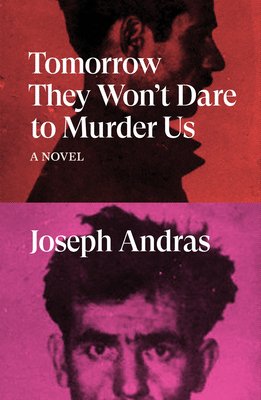
This is one of my favorite-ever novels! It tells the story of a "pied-noir" (a person of European descent, born in colonized Algeria) who supported the Algerian resistance. Use this affiliate link to support me and indie bookshops with your purchase.
 Signal Hill
The audio feature "A Porous Place" in Signal Hill's first issue is a beautiful account of how a small French farming town grapples (and fails to grapple) with the history of a local military installation that served as an internment camp during the Algerian War.
Now here’s everything you didn’t know you needed to know about The Battle of Algiers:
🎞️ What is The Battle of Algiers?
Saadi Yacef headed the armed wing of the nationalist Algerian National Liberation Front (FLN) in Algiers until his capture in 1957. The FLN fought for Algeria’s independence from France in the Algerian War of 1954 to 1962. While in jail, Saadi Yacef made an account of the struggle. Then, when the war ended, he set off for Italy in search of a director to bring the story to the silver screen. A partnership with Pontecorvo led to The Battle of Algiers. Saadi Yacef also stars in the film as Commander El-Hadi Jafar, a character modeled on his own experiences.
The documentary-style production follows the major events of a roughly three-year period when Algiers was under French military rule, one of the most well-known and bloodiest periods of Algeria’s anti-colonial struggle. Algeria won its independence in 1962, over 130 years after the French began colonizing the territory in 1830. The film debuted at the Venice Film Festival in 1966, only four years later, where it won the festival’s highest prize, the Golden Lion. It was also nominated for the Academy Award for Best Foreign Language Film.