
Charlotte Hawkins Brown, a giant in the movement for Black education, opened the Palmer Memorial Institute in the small North Carolina town of Sedalia at the height of the Jim Crow era. Now, more than a century later, the historic campus is being preserved and reimagined as a thriving community education and culture hub, while across the street, a new mixed-use development is planned to serve as Sedalia’s new downtown. It’s all thanks to locals who take pride in Brown’s legacy, as well as support for preservation works from the National Trust for Historic Preservation (NTHP) and Robert A.M. Stern Architects, or RAMSA.
“We always want to honor Dr. Brown and her contributions to this area because during the time of Jim Crow, we didn’t have a lot, and it was a miraculous thing to see a teenager come to this area in order to teach brown and Black kids,” said Cam Dungee, Sedalia’s town administrator. “We try to make sure that the vision of the town coincides well with the history, and not just, ‘Oh, we’re building like everybody else. We’re getting ready to grow.’”
Brown opened the Palmer Memorial Institute in 1902, after the area’s only school closed and left an entire community of Black children without access to education. She named the school for Alice Freeman Palmer, a leader in the nineteenth-century movement for women’s education and her mentor. Over the next several decades, Palmer Memorial Institute grew across a 300-acre campus into 14 buildings, became a nationally recognized preparatory school, and transformed the lives of over 2,000 students. It also supported the broader Sedalia community as the local bureau of community welfare.
The historic campus will continue to anchor Sedalia as the town grows, Dungee said, with the development across the street slated to have between three and four hundred housing units, as well as green spaces and opportunities for dining and shopping. Currently, the town is home to only around 700 people, and Dungee said it lacks walkable spaces.
Sedalia’s leaders envision the development as a new downtown, while the historic campus across the street will serve the community as a hub for research and the arts, as well as a tourist attraction. Recent support from NTHP and an adaptive reuse plan from RAMSA promise to help realize this vision, revitalizing what has long been an underfunded historic site with unrealized potential. Those working on the project are keen to point out that these new developments mirror Brown’s own vision for the area.
“She started Palmer Memorial Institute at the age of nineteen, and as she grew and matured, the school grew along with her, and the town grew along with that,” said Tanesha Anthony, site manager of the Charlotte Hawkins Brown Museum, which stewards the historic campus with its 12 remaining buildings on a 35-acre site, now owned by the State of North Carolina.
 Marianne Dhenin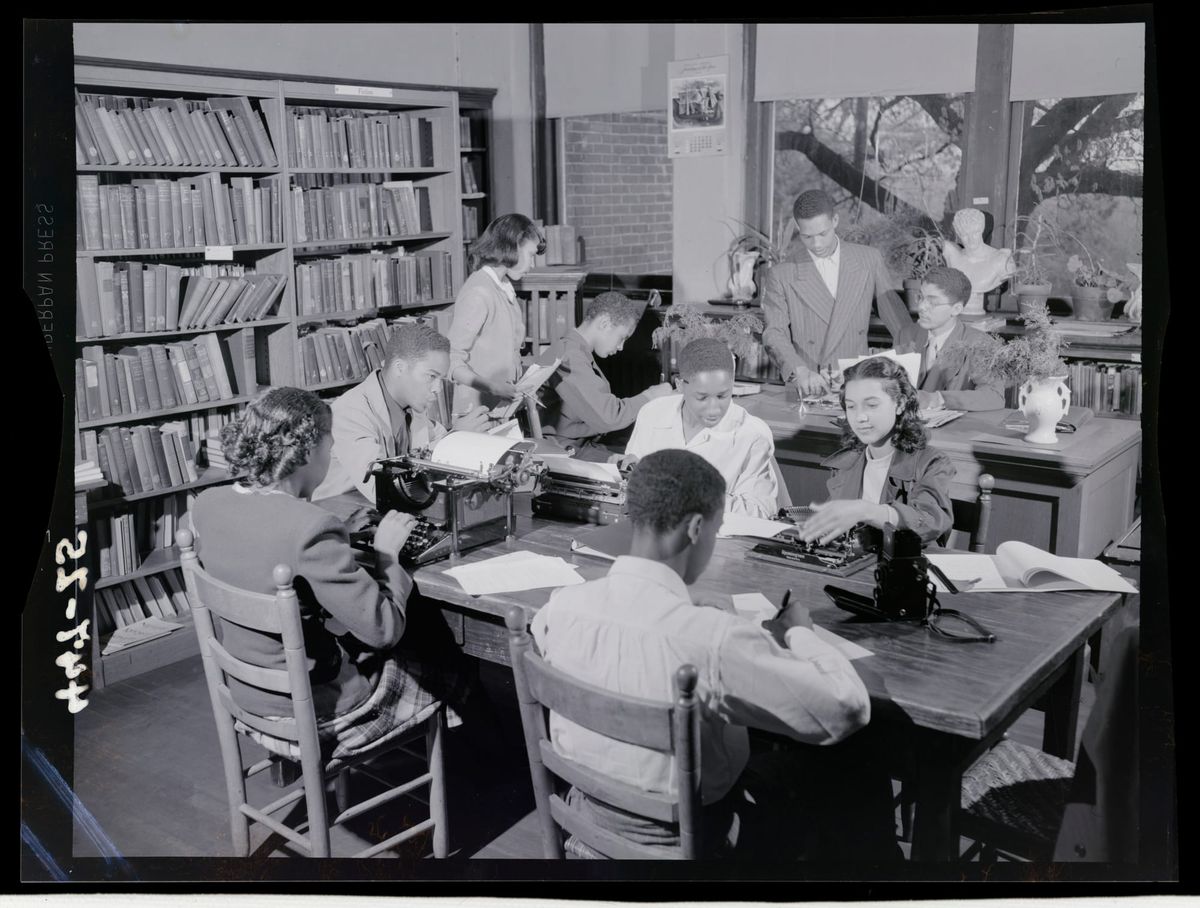
For more on Brown and her historic school, read my interview with historian Ida Jones.
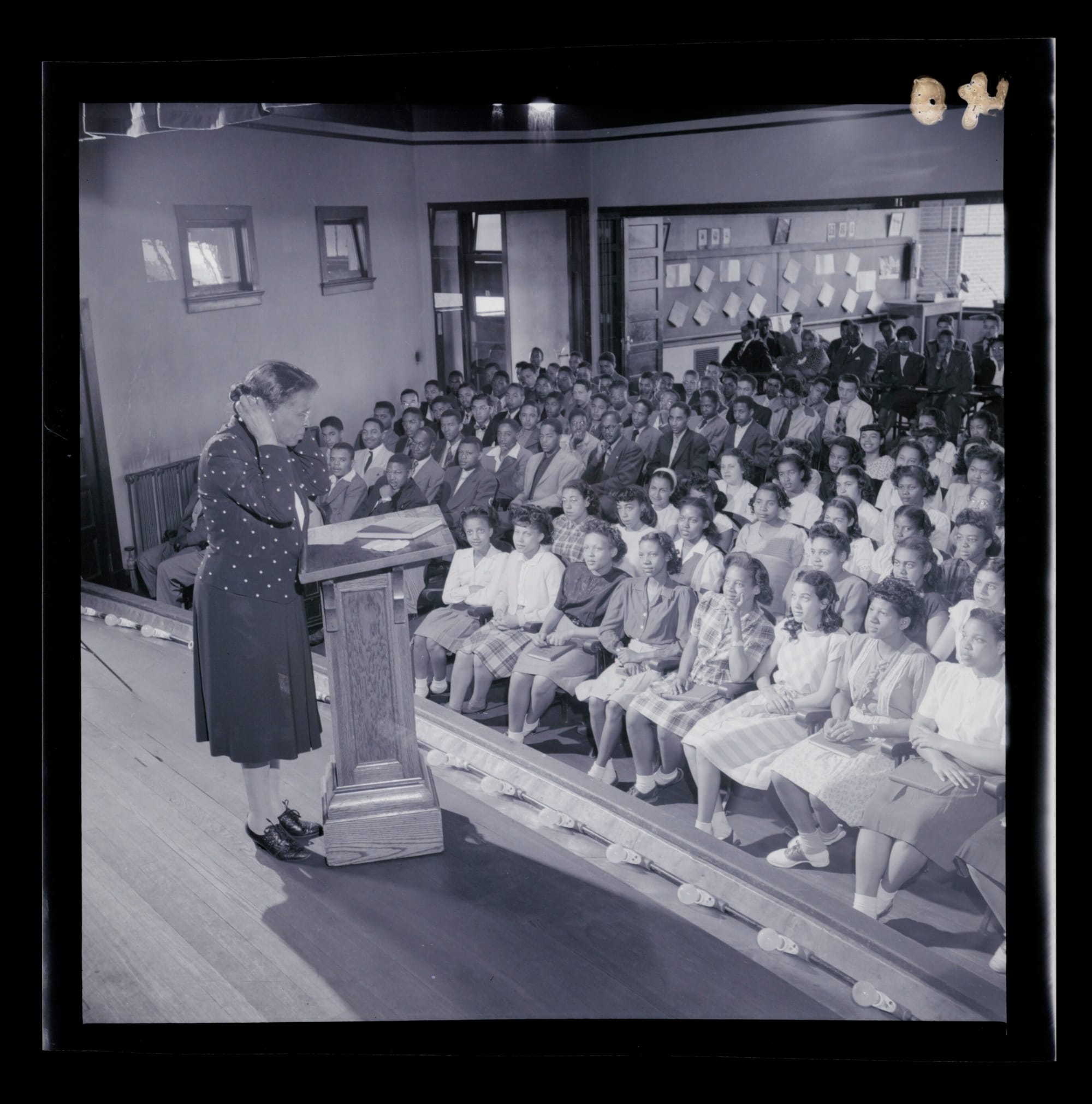
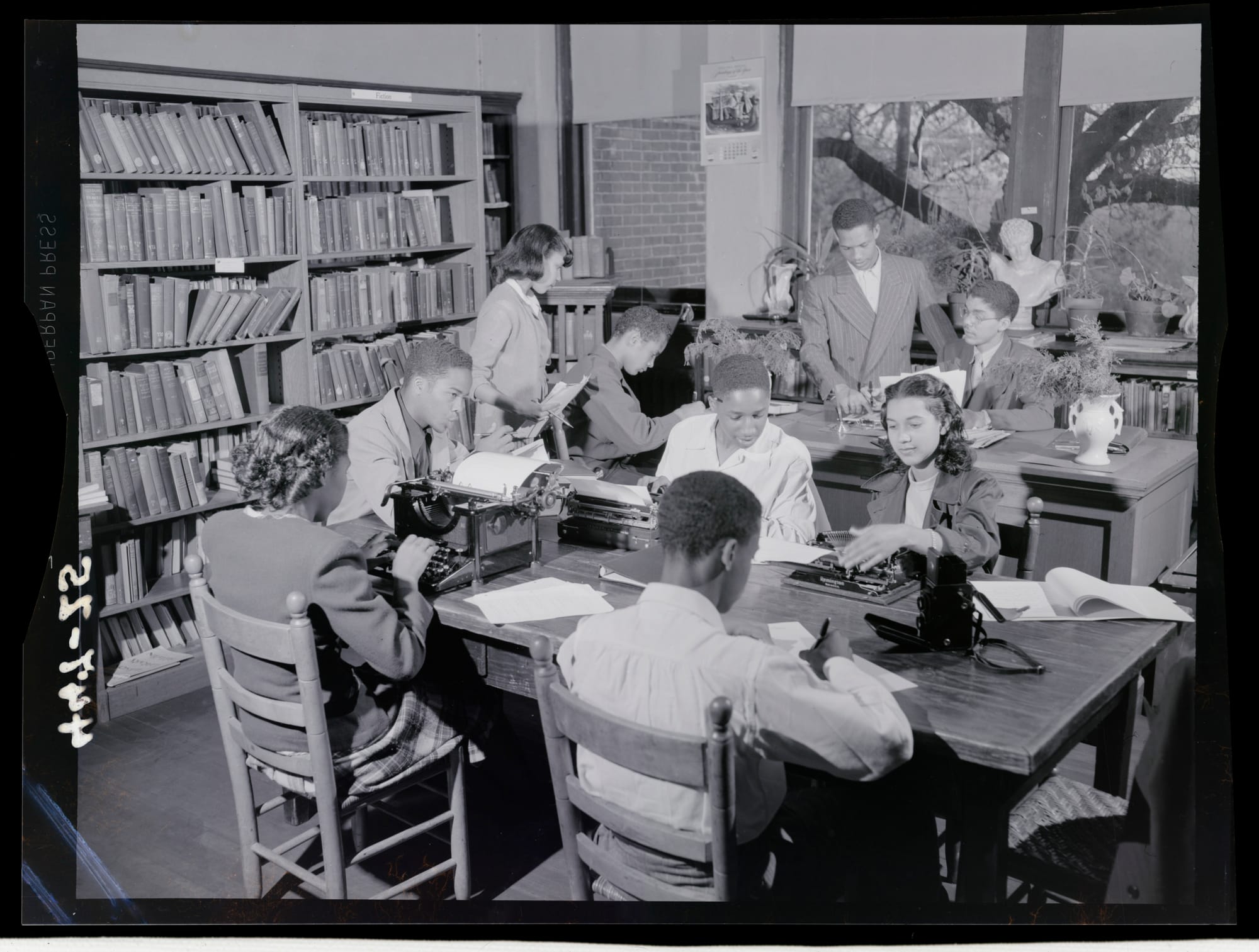
R: Brown addresses students, a regular occurrence at Palmer Memorial Institute. L: Student journalists writing for the student paper. Photo from the Griffith J. Davis Collection at Duke University Libraries, CC BY-NC-SA 4.0.
The school was forced to close in 1971 following a fire, but parts of the campus have continued to serve important functions for Sedalia. Canary Cottage, where Brown lived during the decades she served as the school’s president, has been restored and serves as a historic house museum. The school’s old dining hall is used as an early voting location and can also be rented for events like weddings and reunions. The city hosts annual events there to honor the town’s elders and Brown’s legacy.
The campus was named a state historic site in 1987 and remains the only designated Black women’s history site in North Carolina. But that recognition has not been enough to prevent many of the old buildings on the sprawling grounds from falling into disrepair. The site was named to NTHP’s list of 11 Most Endangered Historic Places in 2022.
Christina Morris, manager of NTHP’s Where Women Made History (WWMH) initiative, said it is not uncommon for historic sites centered around women’s histories to go under-resourced or otherwise overlooked. Of the thousands of National Historic Landmarks nationwide, only about five percent are designated for their connections to women. “Women go grossly underrepresented and underrecognized in the ways that we publicly acknowledge what is important to our history or what is important history in this country,” Morris said.
The Palmer Memorial Institute site was the second to receive a grant of design, planning, and technical services from RAMSA through a partnership between the architecture firm and WWMH. Stone Quarry Art Park in Cazenovia, New York, the past home of sculptor Dorothy Reister, received similar support after the partnership was first launched in 2022.
Work on the Palmer Memorial Institute campus began soon after, but developed more slowly as architects collaborated with WWMH, the Charlotte Hawkins Brown Museum, Palmer Memorial Institute alumni, Sedalia administrators, and community members. “It took several months for that to really coalesce into a formal vision, and while that added time to the project, it ended up being hugely beneficial for our ability and RAMSA’s ability to work with the community, help tailor the recommendations, [and] best achieve their vision,” said Morris.
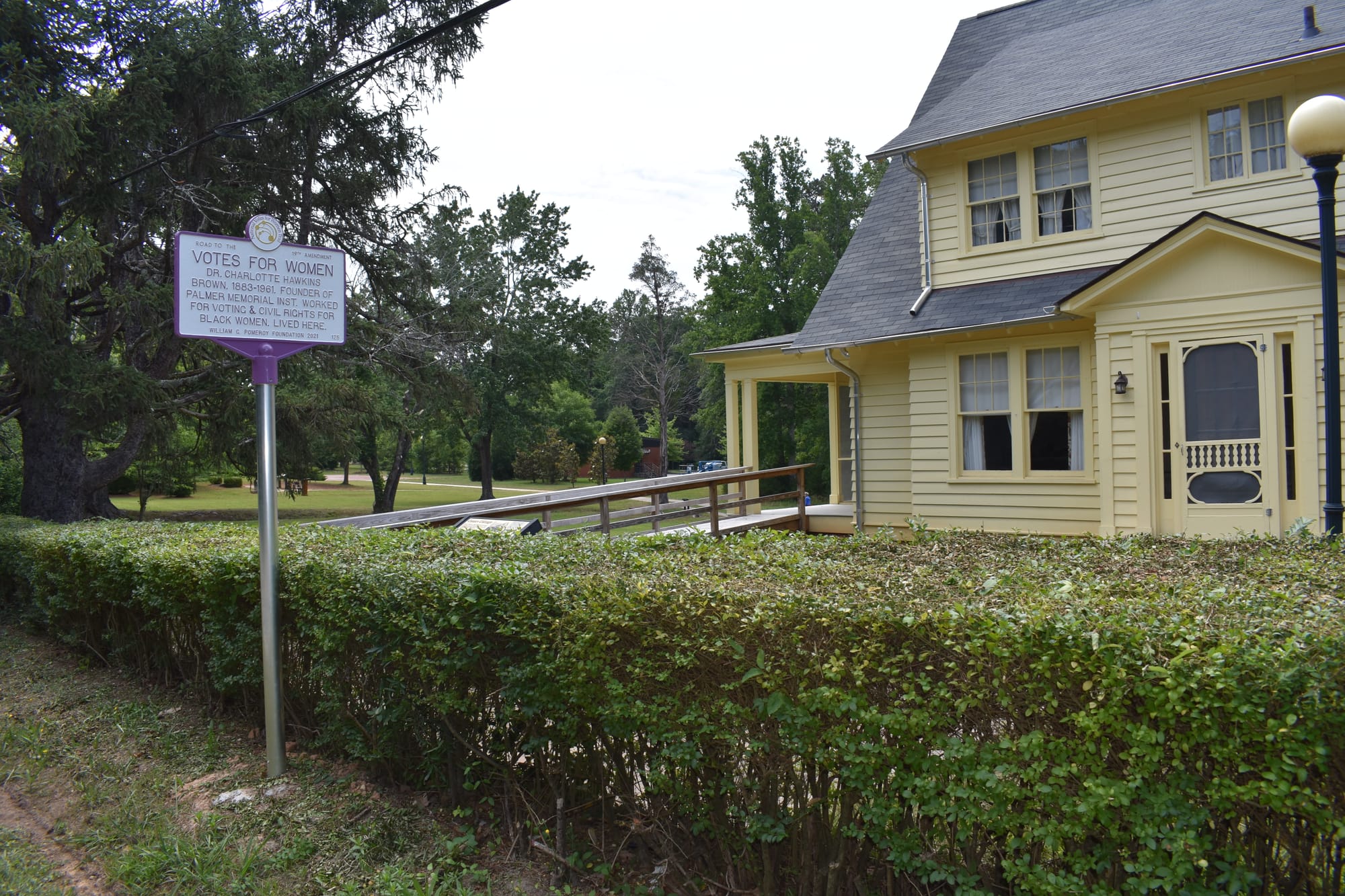
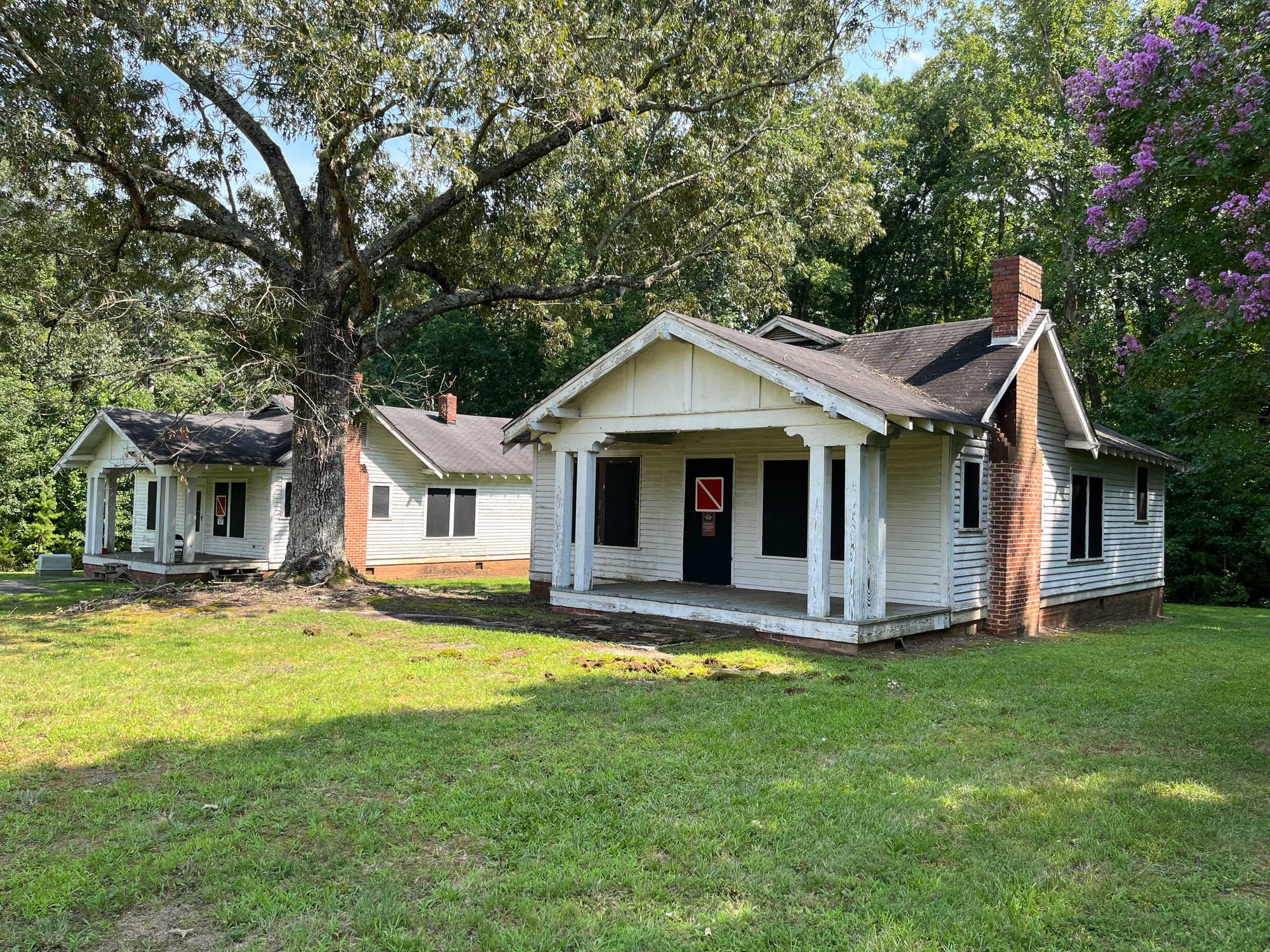
L: Canary Cottage in 2022. The two-story, butter-yellow home is now a house museum. A purple-and-white marker in front labels it as an important site in the fight for women's suffrage. Photo via Wikimedia Commons, CC BY-SA 4.0. R: Cottages that will be renovated as scholar and artist-in-residence housing. Photo courtesy of RAMSA.
Honoring Brown’s contributions to Sedalia and so many young people of color who grew up at her school was at the heart of that vision. “Everything we envisioned are things that were here in some capacity [during Brown’s time],” said Anthony. “We would just like to bring them full circle and bring them into the twenty-first century.”
The firm’s completed plans for the Palmer Memorial Institute campus were shared for the first time this February and celebrated at a May 19 event at RAMSA’s New York City offices, which brought together leaders from the museum, preservation advocates, and Palmer Memorial Institute alumni. The plans conceptualize the site as a cultural and educational hub and establish a framework to guide its rehabilitation, restoration, and adaptive reuse.
“A project like this is very special for me because I feel like it’s where all my passions intertwine,” said Cheryl Lu Xu, an associate at RAMSA and a member of its Women’s Leadership Initiative (WLI). “I think adaptive reuse is the best way to approach sustainability in design. I also very much value community input in the design process because I think that’s the best way to serve our stakeholders and users, and the aspect of amplifying women’s voices and their legacy is very in line with WLI’s mission.”
The next steps for the site are to secure funding through grant programs or philanthropic donors to move forward with the adaptive reuse plan, one piece at a time. The school’s old science building in the center of campus will be the first to undergo restoration works and reopen as the site’s welcome center and gift shop.
Later, a couple of cottages that have long needed maintenance will be restored as artist and scholar-in-residence housing. Anthony said the museum plans to host historians interested in its Black history archive, as well as invited speakers and artists working on long-term projects. The museum also plans to make the revamped auditorium and dormitory buildings available to mission-aligned organizations for hosting conferences or retreats.
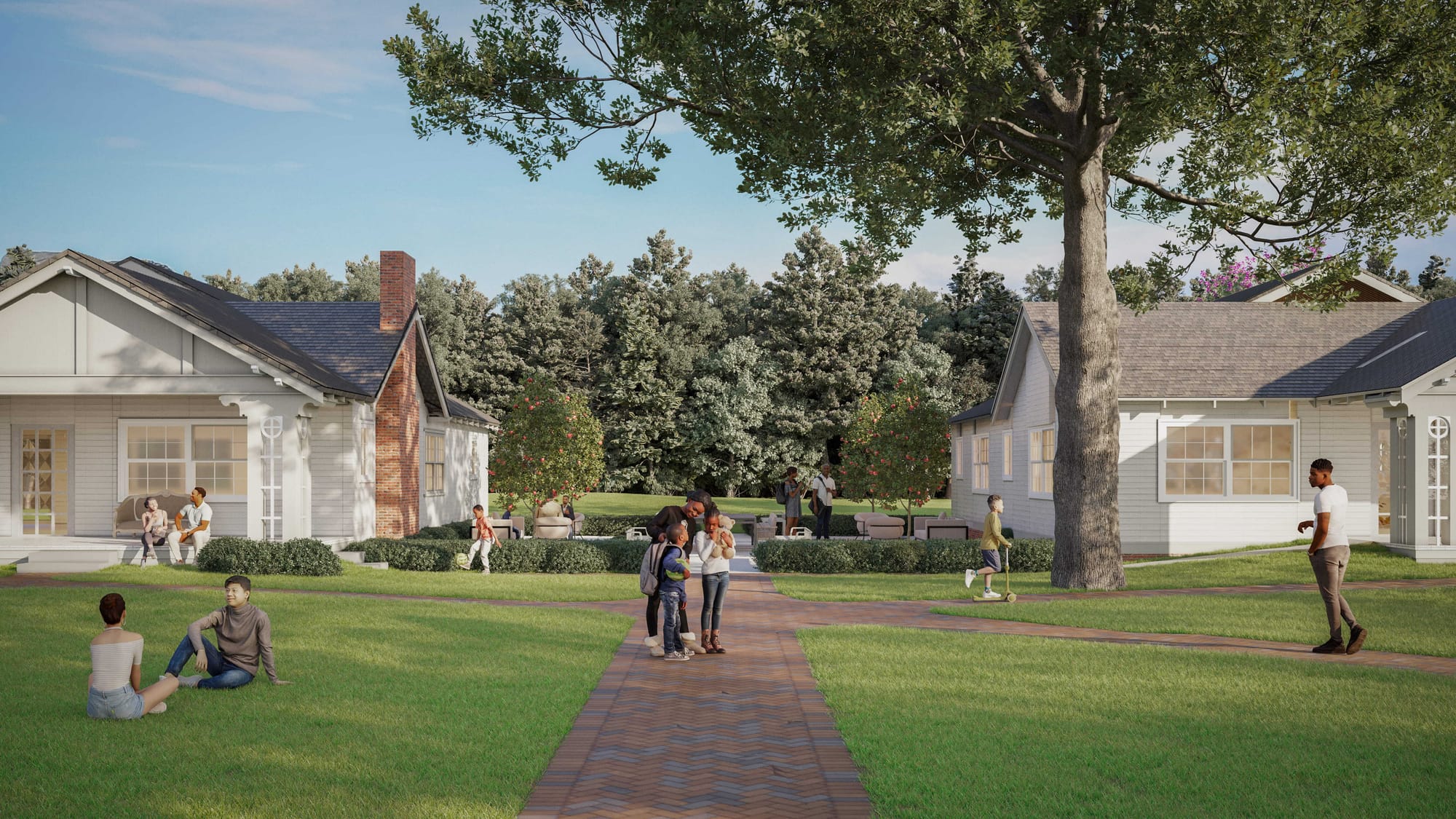
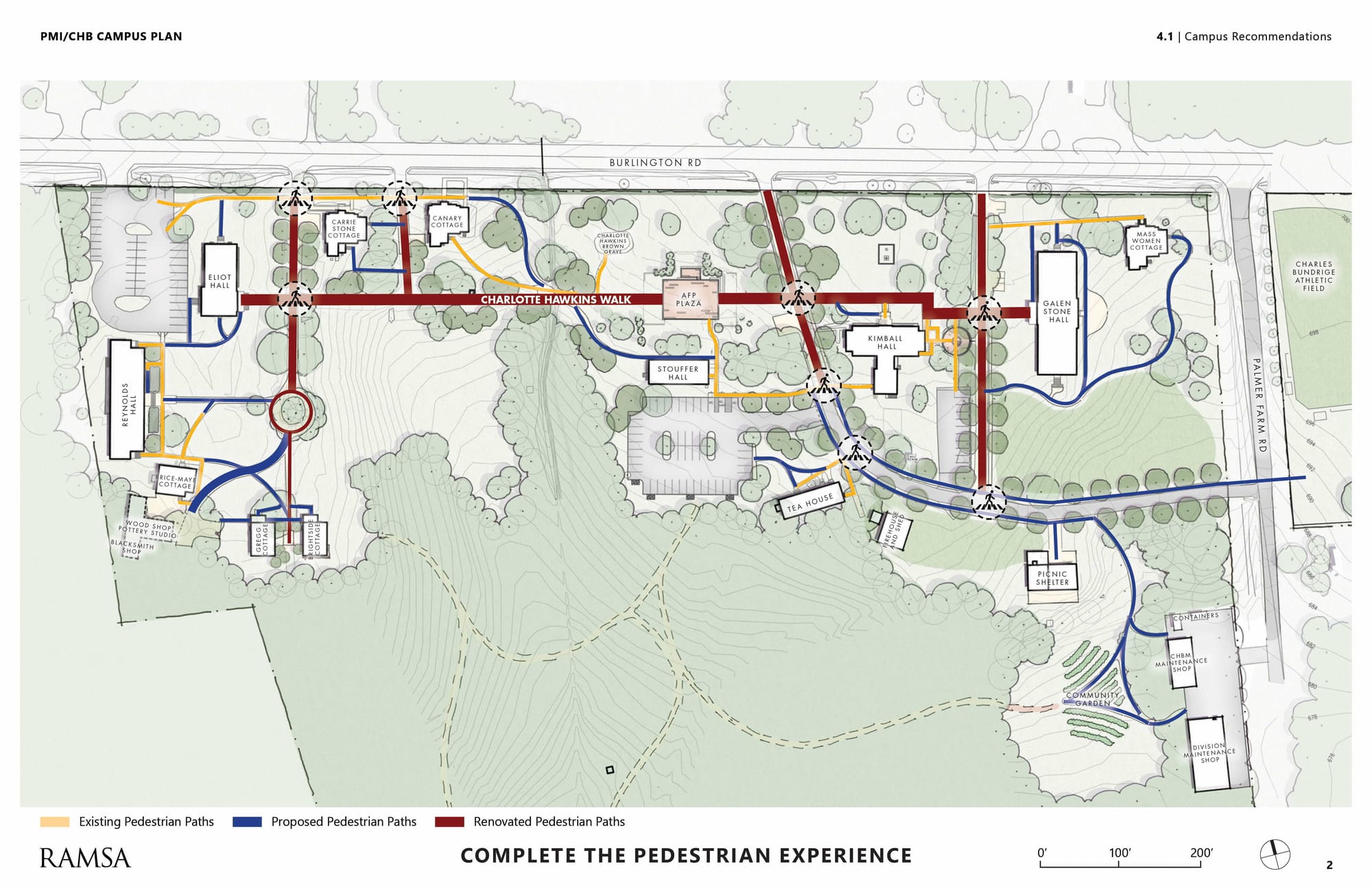
L: Rendering of the site after the cabins are renovated and pedestrian paths installed. R: An illustration of the site, showing RAMSA's plans for an improve pedestrian experience. Illustrations courtesy of RAMSA.
Architects were careful to preserve character-defining features of the campus’s buildings when drawing up their plans. Such features include an iconic front porch on the dining hall, where generations of graduation photos were snapped, and a brick fireplace in Galen L. Stone Hall, which was built in 1927 as a girls’ dormitory. Other features will be recreated from historical photographs, including the modest glass bauble light fixtures that once hung in the ground-floor auditorium of Charles W. Eliot Hall, a former boys’ dormitory.
Visitors will be able to explore the historic site along new walking and bicycling trails that link each of the buildings and loop past a community garden — a tribute to a farm that once fed students on the original campus. It is these green spaces that most excite Dungee about both the historic preservation project and the neighboring mixed-use development. “I want to be able to walk through the community once I get to a place where I’m ready to retire, and feel proud about the part that I played,” she said.
For Morris, it is only right that the Palmer Memorial Institute remains at Sedalia’s heart. “The history of these two places is so tied together that it makes absolute sense that the future of these two places would also be tied together.”


