Paid subscribers make my reporting possible. Consider joining them:
Immigration and Customs Enforcement (ICE) agents have created a crisis in Minneapolis hospitals since escalating anti-immigrant operations in the Minnesota city in early December.
Health care workers who spoke to Truthout report that the number of agents in hospitals has risen sharply since the beginning of the year, with ailing or injured detainees regularly brought into emergency departments at multiple city hospitals at all hours, including overnight. Meanwhile, workers told Truthout that those federal agents have intimidated hospital staff and disregarded federal law, medical best practices, and hospital policies, often with limited pushback from hospital administrators. Where administrators have seemed reluctant to intervene, however, rank-and-file health care workers are stepping up to protect their colleagues and their patients — thanks to organizing and training efforts that began long before agents descended on the Twin Cities.
“This is a human rights crisis that we will be talking about for years to come in health care and what happened in these hospitals, and at the same time, grassroots organizing is the only thing that has prepared us to begin to respond,” Jamey Sharp, an area health care worker and member of the health justice committee at immigrant advocacy organization Unidos MN, told Truthout.
Several high-profile cases of ICE agents violating patient rights in Minneapolis hospitals have already made headlines. On December 31, 2025, agents entered the Hennepin County Medical Center (HCMC) Emergency Department without a valid judicial warrant in an attempt to detain a patient receiving care. The agents reportedly remained by the patient’s bedside for over 24 hours, denied their right to family visitation, and, at times, shackled them. The agents left after hospital security “asked for documentation to support their continued presence,” according to a statement from the hospital.
Additional reports have since surfaced of agents shackling at least one other patient in the same hospital, even after health care workers confronted them. Workers at three other area hospitals who spoke to Truthout on condition of anonymity described daily ICE presence on their campuses, as well as multiple cases of agents seemingly guarding patients at their bedsides and violating their rights to have private medical conversations with their care teams.
“I don’t think anyone could have expected the onslaught of ICE agents descending on our metro the way that it has,” Alycia Garubanda, an acute rehab therapist at another Minneapolis hospital, told Truthout. “But we’ve adjusted to meet the moment.”
For many health care workers across the metro area, meeting the moment has meant drawing on knowledge gained from “know your rights” trainings that Unidos MN began offering in March 2025. According to Unidos MN, more than 300 health care workers have participated in the trainings thus far, including many union members. Sources who spoke to Truthout agree that collaboration between community rights groups and local unions, including the Minnesota Nurses Association and chapters of the Service Employees International Union and the American Federation of State, County, and Municipal Employees (AFSCME), has been central to the success of these trainings and other organizing wins.
Nathan Paulsen, a mental health worker and steward with AFSCME 2474, a Twin Cities union of frontline staff at Hennepin Healthcare, including HCMC, told Truthout that community groups have vital expertise and understand the needs and perspectives of targeted communities. “The labor movement is at its best when we have unity, share resources and knowledge, and grow bonds of trust — not only with one another within the labor movement, but stretching those relationships into the community as well,” he said.
The “know your rights” trainings for Minneapolis health care workers focus largely on preparing them for two scenarios: how to respond if federal immigration agents arrive at their workplace without a patient to conduct a raid, and how to respond if agents arrive with a patient. That second situation is behind the current surge of agents in Minneapolis hospitals, according to Sharp and two sources familiar with local emergency departments who spoke anonymously to Truthout. When agents bring someone to an emergency department, it could be because the person has suffered a medical emergency or otherwise requires care while already in detention; because a person who was recently arrested reported a medical condition requiring medication or clearance before detention; or because agents injured or brutalized a person during their arrest.
“The main point that we try to help people understand at these trainings is that civil detention [i.e., immigration detention] is very different than criminal custody,” Sharp explained to Truthout. “People who are in civil detention deserve to have all of the rights that any other civilian would have when they go to the hospital.” According to Unidos MN, those rights include family visits, keeping family members apprised of a patient’s condition if that patient so chooses, private conversations with the patient’s care team, independent medical decision-making, and freedom from being shackled or bound.
Three health care workers at different Minneapolis hospitals, who spoke to Truthout anonymously, said they have observed federal agents seemingly denying patients these rights in their hospitals. “They’re not being afforded the same rights as our other patients,” one emergency department nurse said. But with the knowledge and connections gained from “know your rights” trainings, a growing number of health care workers now know that they can push back and report suspected abuses.
Through the trainings, workers have built communication and rapid response networks, developed a system for whistleblowing on violations of patient rights, and learned how to press for improved hospital policies. Employees have also developed a mutual aid network to support each other in various ways, including arranging to arrive at and leave work in groups to deter harassment from federal agents. “The foundation for all of this work, movement, and advocacy is not only a knowledge of rights, but a willingness to embody them with specific actions and participation in a shared project to establish robust rules first and get ICE out of our hospital and state next,” Paulsen told Truthout.
Those communication and rapid response systems kicked into gear following the reports that agents were guarding a patient’s bedside at HCMC on December 31, 2025, without a valid judicial warrant. After Unidos MN was notified, it organized a press conference.
Paulsen told Truthout that many AFSCME 2474 members were among the roughly 100 employees, elected officials, and rights advocates who gathered outside HCMC on January 6 “to call attention to the cruelty and injustice of allowing ICE to roam freely in our neighborhoods and in the hospital.” Under pressure following the press conference, HCMC used model policies and best practices provided by Unidos MN to implement new guidelines to better protect patients from warrantless harassment.
Hospitals across the city have done similar in recent months following demands from organized health care workers and community groups. For many workers, improving their workplace policies began with reviewing models. Sharp told Truthout he encourages health care workers to review a model policy from People’s Care Collective, a coalition of California unions and rights organizations, including the American Civil Liberties Union of Southern California: “It’s not only a best practice, but also legal and possible,” said Sharp. Unidos MN has also produced a shorter version of similar guidelines.
While Minneapolis health care workers continue to observe federal agents in their workplaces and are concerned about ongoing abuses, those who spoke to Truthout said they feel better prepared to confront these situations following training and organizing with colleagues.
“These ICE agents have pushed, they’ve shackled patients to beds, and they’ve done a number of things to break the law. [They are] trying to see how much they can get away with,” Sharp told Truthout. “But now we have health care workers who feel empowered, [and] that ultimately leads to a better chance that people will at least have one or two people looking out for them and their rights and fighting for them during these impossible situations.”
It is a difference that benefits both patients and staff. Garubanda, the acute rehab therapist, told Truthout that Minneapolis hospitals boast diverse workforces, and the presence of federal agents has scared some of her colleagues of color into bringing their passports to work. “It has been alarming to me to see my colleagues who are immigrants, East African, Latino, or women who wear hijab, terrified to come to work.” Recently, news broke that the Department of Homeland Security is also auditing HCMC employee records, further fueling fears that agents plan to target workers.
Among the guidance in Unidos MN’s best practices for navigating ICE presence in hospitals is a rule that staff requests for unit reassignment when ICE is on campus must be accommodated immediately. The policy also recommends barring agents from staff-only spaces, such as break rooms or locker rooms. At HCMC, agents have reportedly been observed in staff break rooms and parking lots.
For health care workers across the U.S. who may be wondering how best to prepare their own workplaces in case federal agents head their way next, Minneapolis health care workers who spoke to Truthout had a unified message: If you haven’t already begun to organize, train, and strengthen policies, the best time to do so is now.
“Speak up within your institution, speak up in department meetings, speak up any time that a group of health care workers is together,” suggests Garubanda. “These institutions want us to feel like we can’t say anything, like we’re not allowed to talk. That’s ridiculous; we’re health care workers with moral and ethical obligations to our patients. We have to push for better rights, care, protections, safety measures for patients, families in our communities, and also staff members.”
This story was originally published by Truthout.
 Marianne Dhenin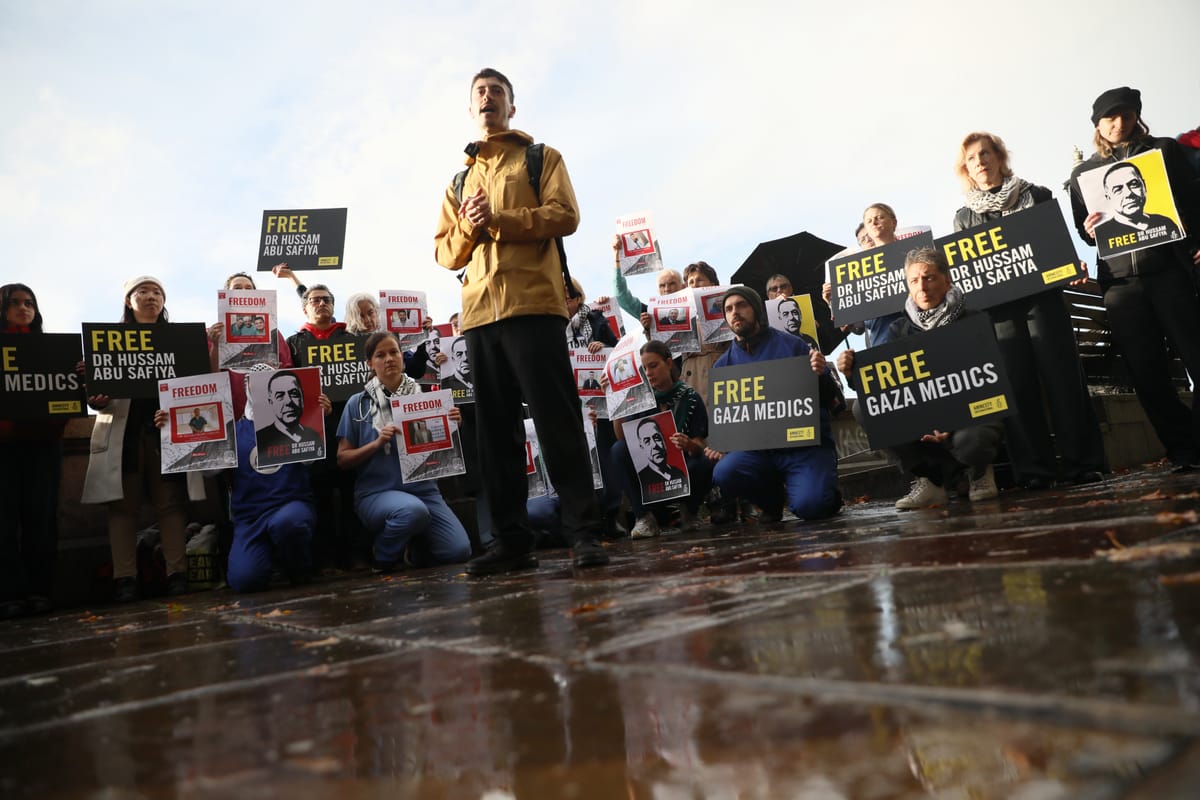
 Marianne Dhenin
 Marianne Dhenin